An Introduction - Human Capital Focused
Good morning, Human Signals,
#Introduction
Brian McCarthy here. I’ve been a human capital performance person since I taught Workstation/Server 3.51 and NT. From humble beginnings, I worked at a little firm called Berkeley Computer Training, founded in 1986 in the Greater Philadelphia Area (now Judge Learning), where I started pulling network wires and teaching in the early 1990s. I’m a trainer, instructional designer, eLearning developer, and human capital expert. Recently, I’ve volunteered under the Office of the Secretary of Defense, designing programs such as CMMC, delivering DoD workforce compliance, and providing cyber risk regulatory leadership; my glue is people.
I’m here because I’m seeking to add insights on human competency (competence). Human capital is the highest cost center for organizations, and if we’re going to employ the best, we should assure they perform at peak performance. Organizations, colleges and universities, and the government are moving toward Skills-Based Hiring (SBH). SBH will require that all curriculum owners and creators design their programs with competency measures in mind. Hold this thought for more details below.
I’ve always worked around competency models, from full development (creating) to aligning material to existing standards. I believe we can’t prove what we can’t measure. I’m a steward of classical adult education standards, developed by well-known thought leaders such as Kirkpatrick, Gagne, Keller, and more. The Kirkpatrick model has been the most widely used measurement model in my three-decade career. Much of this is due to its simple approach to measurement, which allows any organization to understand what a program accomplishment is.
Level 1 - Reaction: Did you have fun at the trainig (a good doughnut perhaps)?
Level 2 - Learning: Do you feel as if you learned something new from the training (I feel stronger and empowered)?
Level 3 - Behavior: Has this training influenced competency gain and behavioral change in the enterprise (did this change the way our people work)?
Level 4 - Impact: How did this training impact a business metric (time to peak performance, sales numbers, lower turnover, deal margin, etc.)?
Most training lives at Level 2, where we just want to see if folks had fun and if they felt something. It ends there. Even well-known certifications live at Level 2, because a certification doesn’t observe behavior. It’s a “super” Level 2 that measures domain knowledge. This matters, for certain, but I’ve met thousands of S+/CISSPs in my day, from those with deep expertise to the paper tigers. Organizations tend to avoid observable behavior change, and unfortunately, Level 3 is where most training should be, while Level 4 is used to move business metrics.
However, we can’t do this without measurement (pre-assessment, delivery, post-assessment, observation, human approvals, and technical validations). This, of course, takes more time and money, but here's the thing: AI has radically changed how we develop courseware and access, and those savings can move training forward, bringing L3 measures into more programs and delivering verifiable impact to human capital. And here lies the opportunity for everyone, individually and at the enterprise level.
I’ve become highly familiar with pharmaceutical selling models, GMP/GXP clean room manufacturing process models, and cyber-risk competencies, among others. Yet one program in particular holds great value for the future of technology (cyber, risk, AI, governance, etc.). The National Institute of Standards and Technology (NIST) constructed a technical competency model that I truly believe in. It’s called the National Initiative for Cybersecurity Education (NICE), and it’s published as NIST Special Publication 800-181. You can learn more about this project and competency model here:
https://csrc.nist.gov/pubs/sp/800/181/r1/final
Why does this matter? Well, the Office of Personnel Management (HR for .GOV and .MIL) has required that all agencies move to "SBH”. Pause for a moment so we can truly grasp what this requirement means. SBH, as noted above, is the process of aligning job roles to performance competencies, where we can assess an individual’s positioning within a job role against the enterprise’s overall alignment to what good looks like. Think of a dashboard that identifies an individual’s competency gaps and focuses resources on what really matters: 1-3 hour coaching sessions that move the needle against a demonstrable measurement that improves the human firewall, vs. a 3-day class with 30% relevancy.
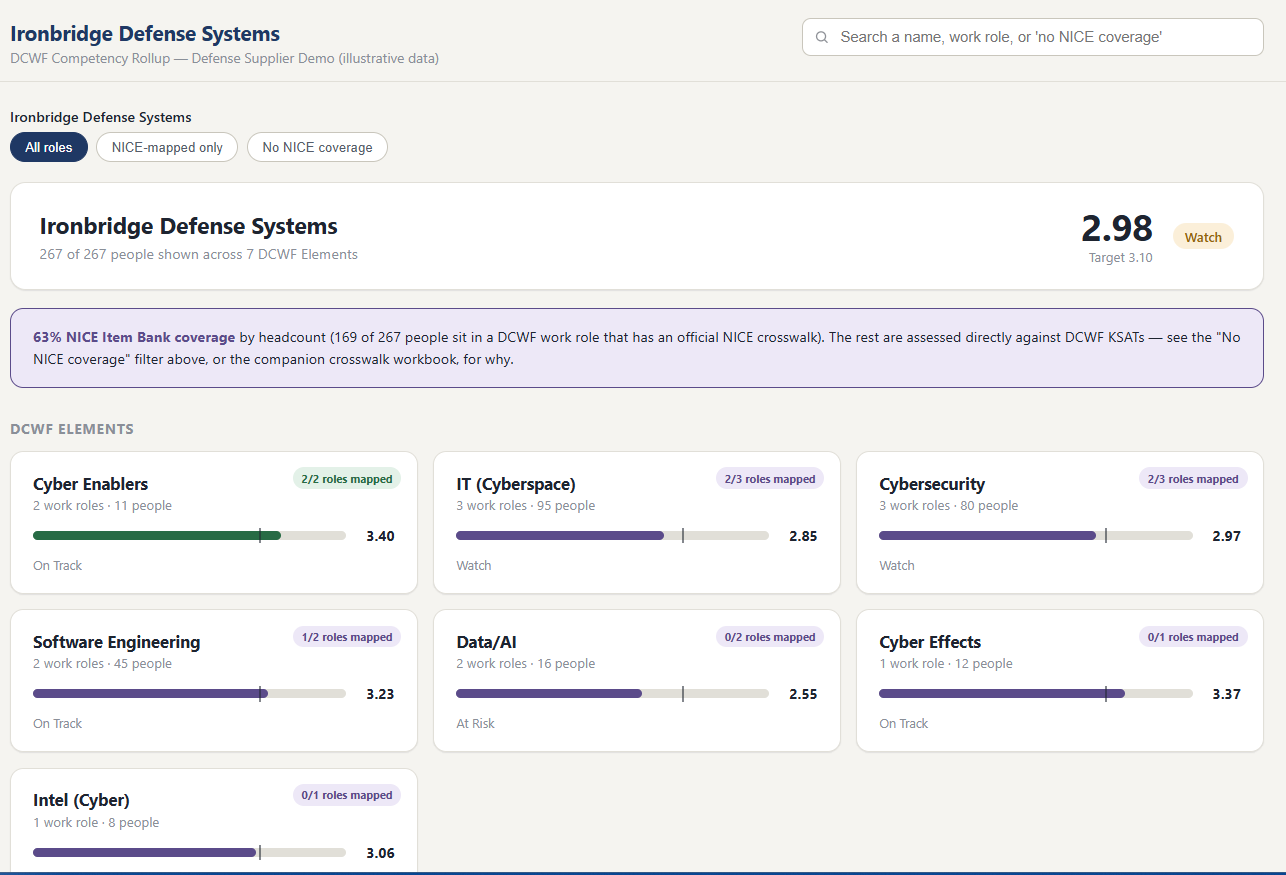
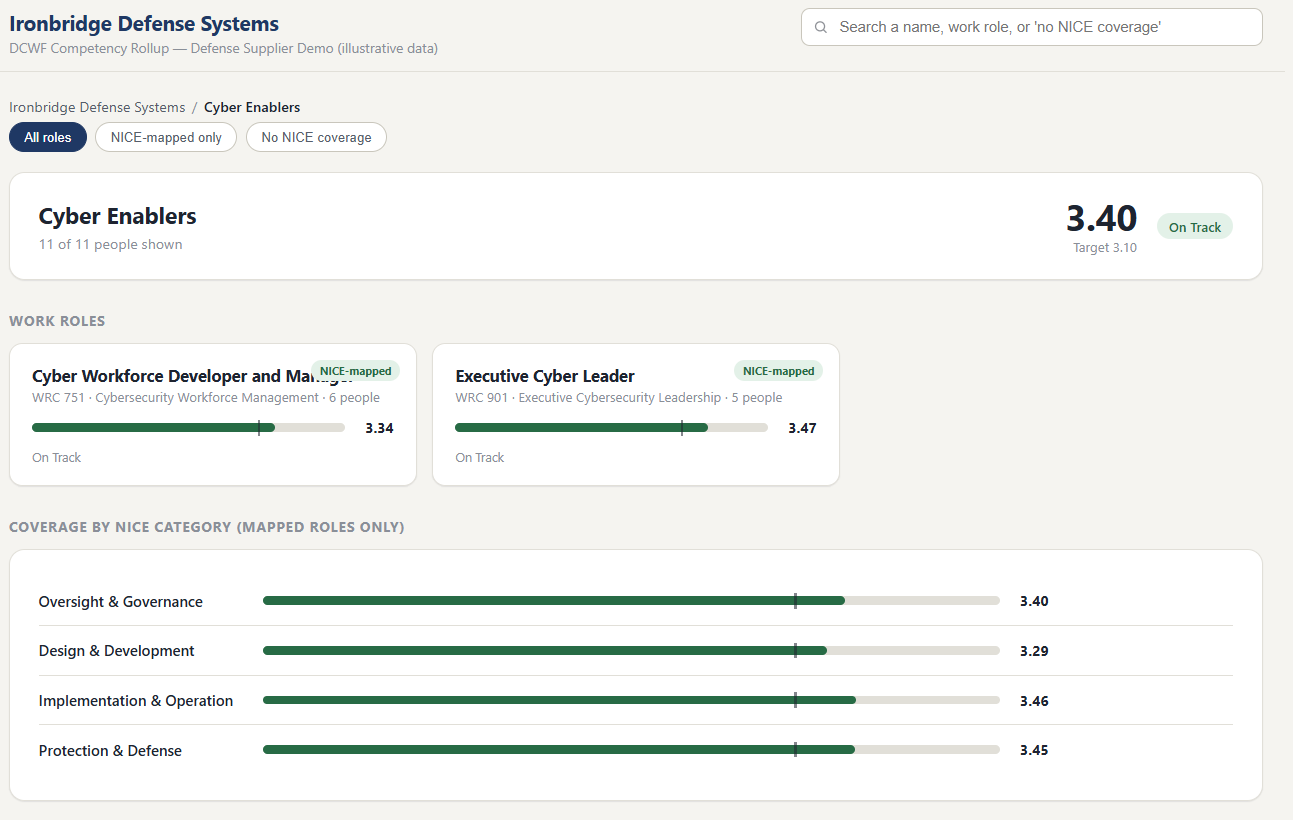
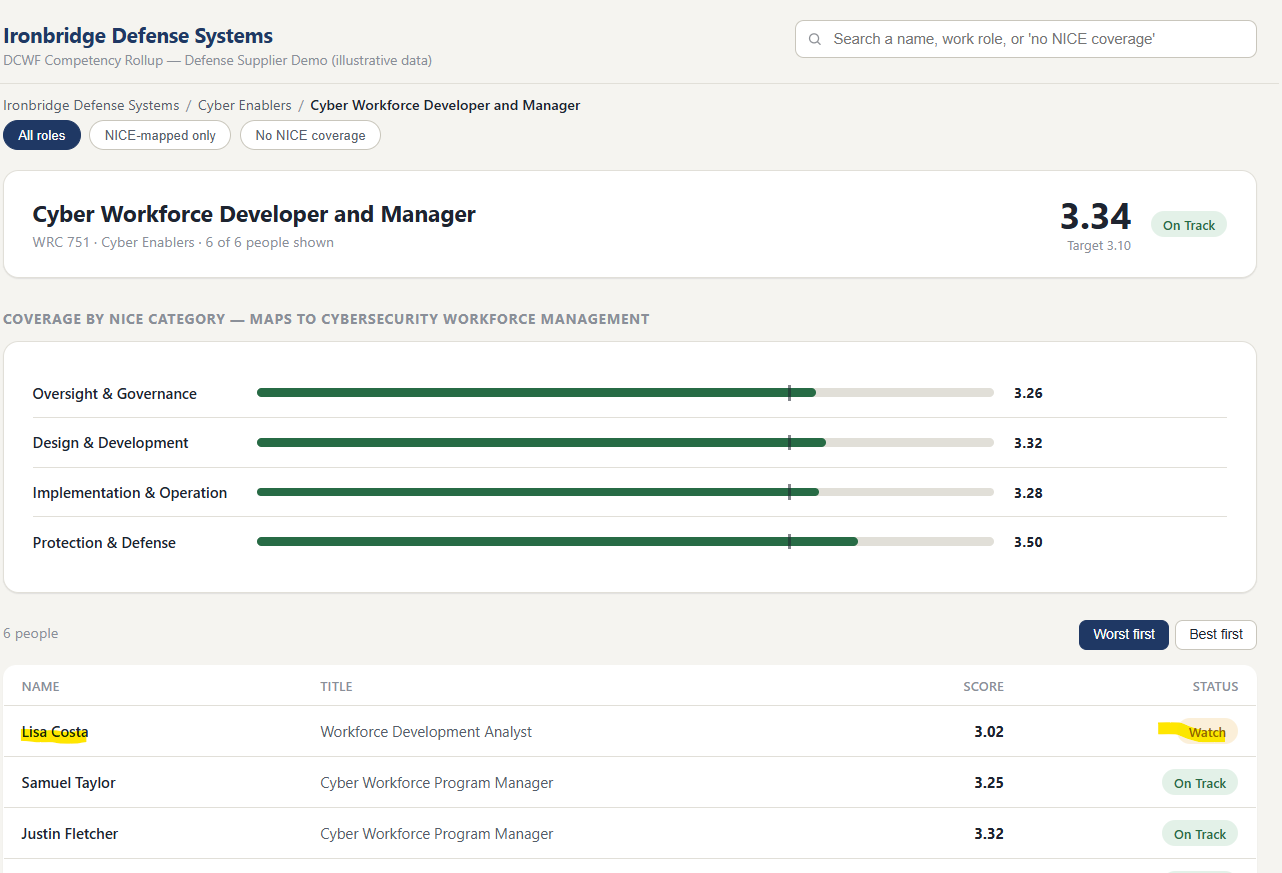
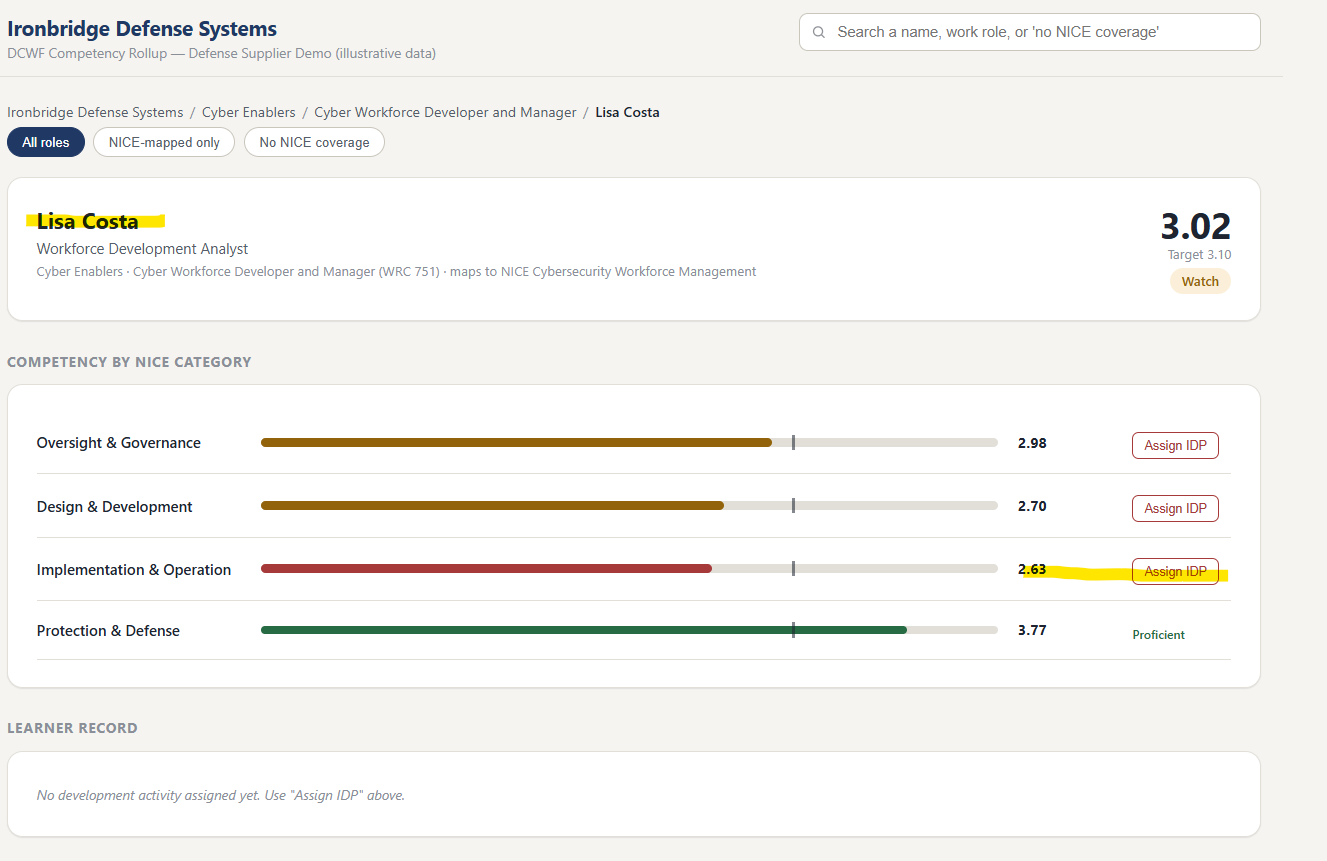
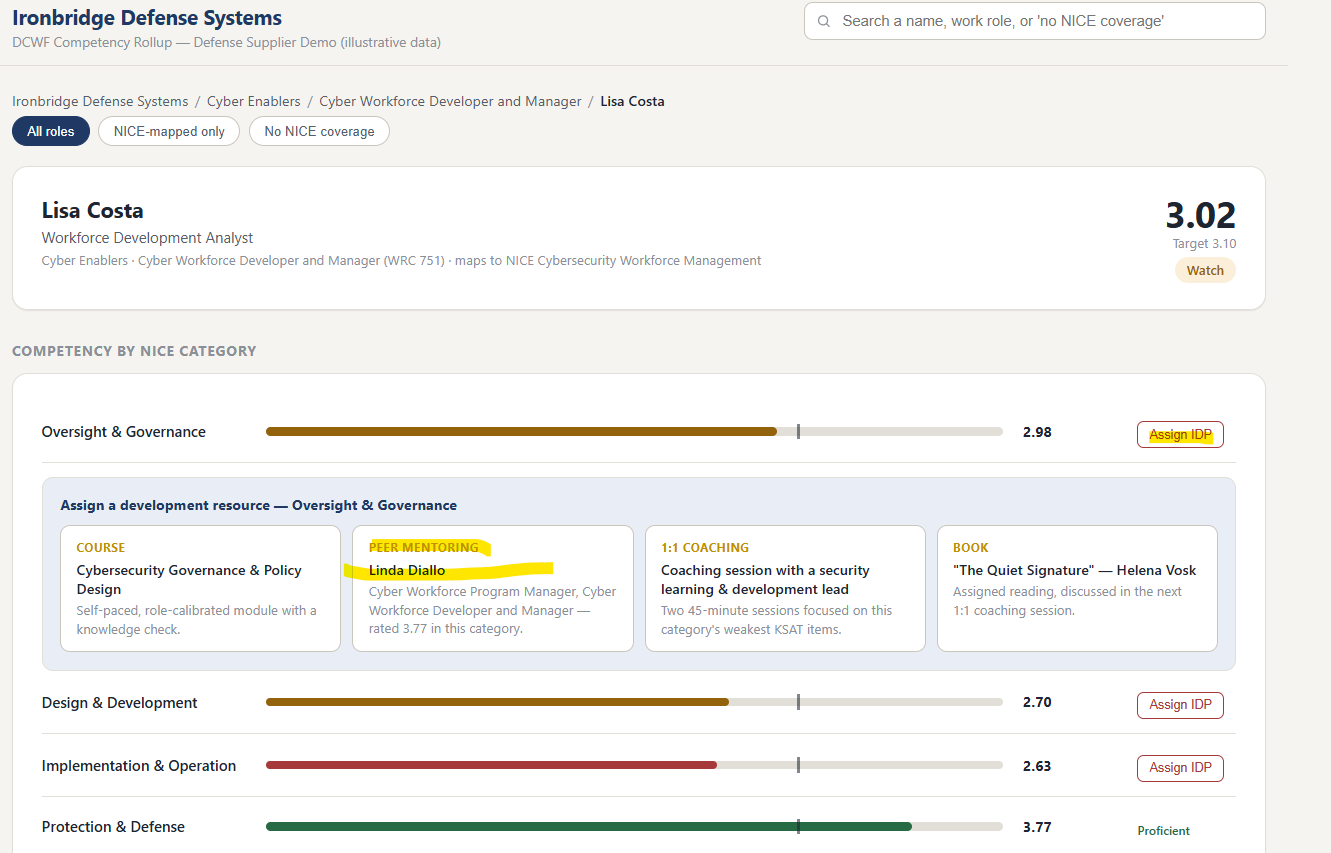
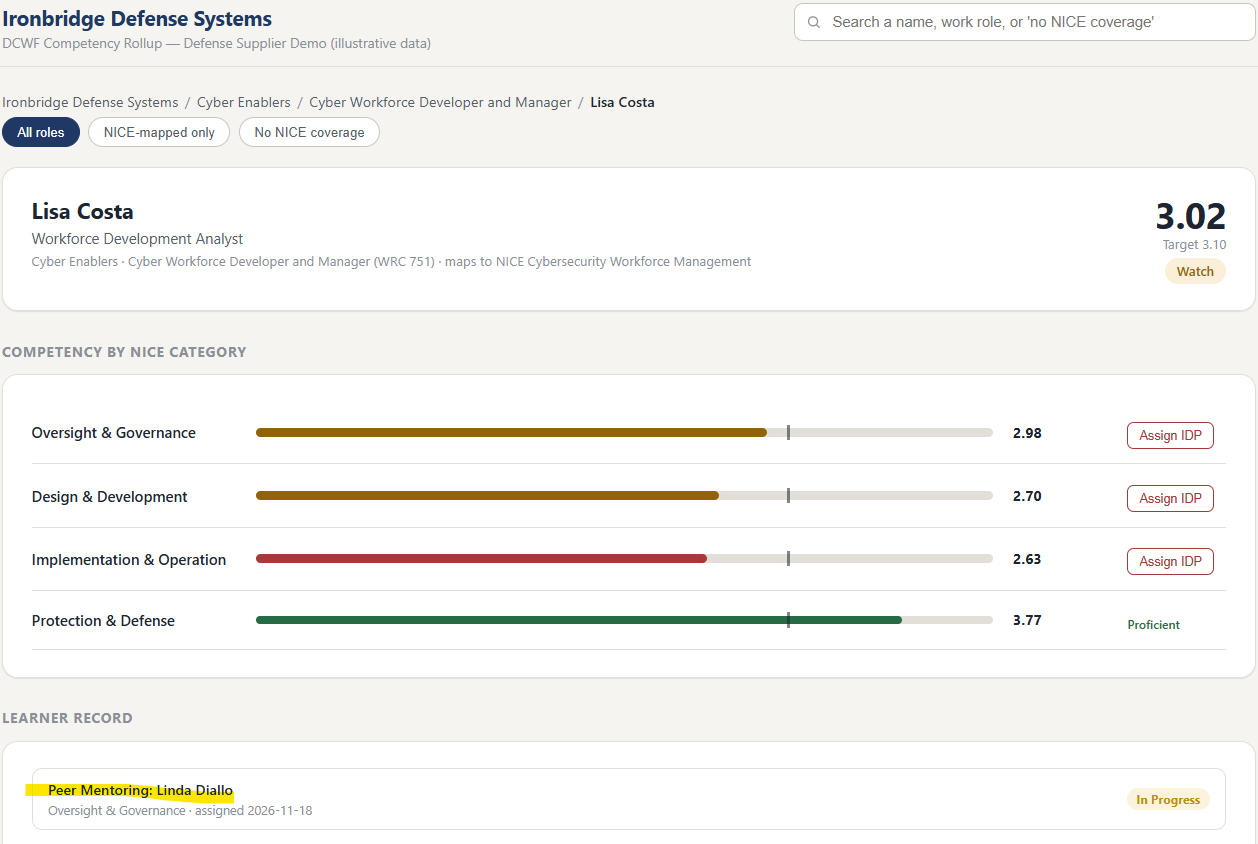
For example, in the NICE Framework, the Work Role of Oversight and Governance and the job role of Cybersecurty Policy and Planning include 67 TKS statements.
Knowledge of computer networking protocols
Knowledge of risk management processes
Knowledge of cybersecurity laws and regulations
etc….
Based on the SBH mandate by OPM, organizations must align the work role to hire properly (assessment), emphasizing the impact of DEIA and fairness in hiring, while focusing on our unique competency within a job role. The Linux kid who dropped out of community college may be the best person for that job role, and this is part of the focus. A broader catch-all for finding, assessing, onboarding, and developing talent beyond the traditional measures of readiness and success.
As governments move away from relying only on undergrad and grad programs (do a search for competency-based degrees) and even certification as the measure of competence, we are entering an era where we can be assessed against a job role, hired on merit, and developed based on unique need. Enterprises close human capital gaps, while employees are treated as they should be: as the individuals they are, with a self-owned, enterprise-managed Individual Development Plan (IDP).
I’m excited for the future of AI in workforce management and development, as I believe we're breaking through traditional sources of knowledge (experts, books, experience) and making it accessible to almost everyone, in smaller, more impactful and relevant bites. They say the best way to eat an elephant is one bite at a time. The future of knowledge requires us to keep snacking, especially in the AI-change era.
The future is demonstrable competence.
So, that's me. I’m glad to be here and look forward to engaging around people, performance, and resiliency.
Cheers!
Brian McCarthy